
Comprehensive Reconstructive Dentistry in Greensboro, NC
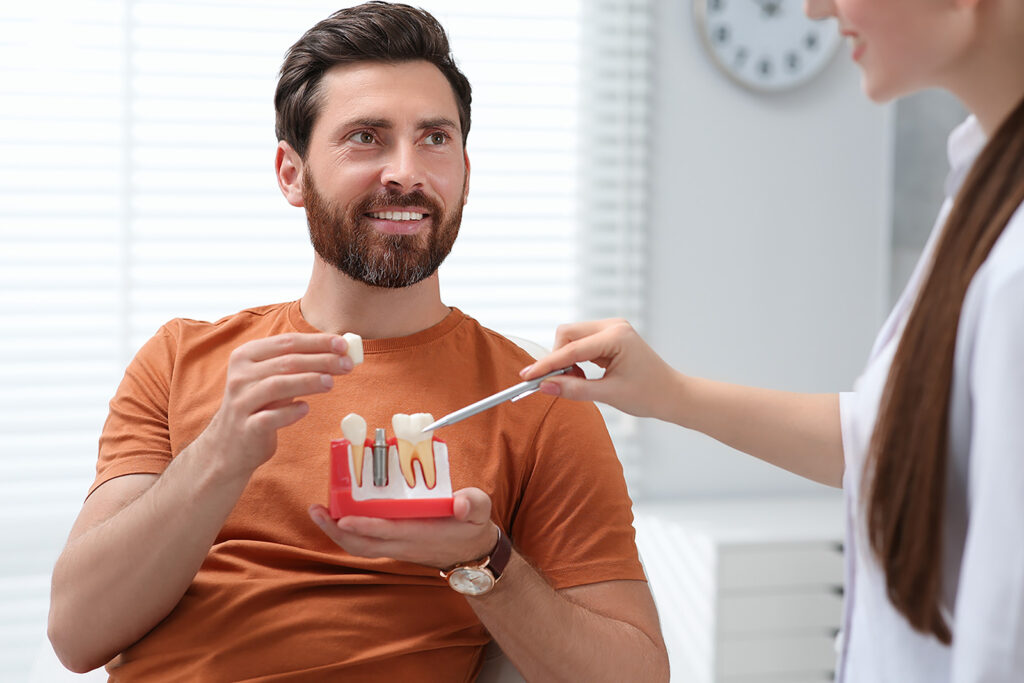
Do you have missing or damaged teeth? If left untreated, these conditions can affect your oral and overall health and well-being. Here at Norman & Gill Dentistry, we proudly offer quality dental restorations in Greensboro, NC, to help restore your teeth to their full functionality and aesthetics.
Restore Your Smile’s Function and Beauty
Reconstructive dentistry aims to replace or restore damaged and lost teeth. It facilitates better speech and chewing while improving your overall health. Some of the common reconstructive dentistry treatments include dentures, dental crowns, bridges, and implants. They are often handled by general dentists.
If you have missing, broken, or damaged teeth, untreated cavities, or decay, dental restorative treatment can help get your smile back on track. While improving the health and function of teeth is the primary objective of reconstructive dentistry, several procedures can also provide aesthetic advantages. This means that they can also help enhance the look of your smile and teeth.
Benefits of Reconstructive Dentistry
In addition to restoring the function of your teeth, dental restorations offer a range of other benefits, including:
- Enhance the functionality for speaking and chewing
- Help you avoid jaw pain by distributing the force of your bite
- Prevent teeth from shifting due to spaces left by lost teeth.
- Keep your bite aligned
Dental Reconstructive Procedures in Greensboro
Norman & Gill offers reconstructive dentistry in Greensboro, NC, with different treatments that can help various dental problems.
- Fillings – Treat small cavities with tooth-colored composite resin material.
- Crowns – Also known as “cap”, crowns cover the whole tooth and fix large cavities as well as fractured teeth.
- Bridges – Replacements for a lost tooth or a row of several missing teeth.
- Dentures (full or partial) – Artificial teeth made from acrylic resin that can replace missing tooth or several teeth
- Implants – Non-removable alternatives to dentures that can replace lost teeth made from titanium or zirconium.
Premium Restorative Treatments for Your Smile
Norman and Gill Dentistry offers dental restorations in Greensboro, NC, with premium treatments to help improve your smile. Our skilled dentists will assess your unique tooth problem and provide the best reconstructive solution, whether you have missing, damaged, or broken teeth.
Call us today at (336) 282 2120 to book your appointment or to learn more.
Frequently Asked Questions about Reconstructive Dentistry
How do I know if I need reconstructive dentistry or cosmetic dentistry?
Reconstructive dentistry restores function when teeth are damaged, decayed, or missing, while cosmetic dentistry focuses on appearance. If your teeth hurt, are broken, or gone, reconstructive treatment comes first; if they simply look imperfect but work fine, cosmetic care fits. Many patients benefit from both, a broken tooth may need a crown (reconstructive), then a veneer on a neighboring tooth to match the smile. Some treatments like porcelain crowns do both jobs at once. An exam is the fastest way to know which category your goals fall into.
What’s the difference between dental implants, bridges, and dentures for missing teeth?
Dental implants replace a tooth’s root with a titanium post plus a permanent crown that stays in the jaw. Bridges anchor a false tooth to the two neighboring teeth, and dentures are removable and sit on the gums to replace many or all teeth at once. Implants are the longest-lasting option and help preserve jawbone, but they require oral surgery and healing time, sometimes with bone grafting first. Bridges are faster and non-surgical but reshape the healthy teeth on either side. Dentures suit patients missing most teeth or those who prefer a non-surgical solution. Bone health, number of missing teeth, and daily habits all shape which option fits.
How long does full mouth reconstruction usually take from start to finish?
Full mouth reconstruction typically takes anywhere from a few months to over a year, depending on how many teeth need work and which treatments are involved. Straightforward cases with crowns and bridges may finish in three to six months, while cases needing implants and bone grafting often stretch to twelve months or longer. The timeline breaks into phases: exams and imaging, any needed extractions or grafts, healing time, then placing crowns, bridges, implants, or dentures. Healing between surgical steps is the main reason it takes as long as it does. A personalized treatment plan will map out the sequence and give a realistic timeframe before any work begins.
Is reconstructive dental work painful, and what sedation options can help?
Most reconstructive dental procedures aren’t painful during treatment because the area is fully numbed with local anesthetic, and mild soreness afterward is usually manageable with over-the-counter pain relievers. Patients who feel anxious or need longer procedures can request nitrous oxide sedation to stay relaxed throughout the appointment. For crowns, bridges, or fillings, most people describe the sensation as pressure rather than pain. Implants and bone grafting are surgical, so mild swelling and soreness for a few days is normal but well-controlled with prescribed medication. Nitrous oxide wears off within minutes, so you can drive yourself home after your visit.
Am I too old for dental implants or major reconstructive work?
There’s no upper age limit for dental implants or reconstructive dentistry — overall health matters far more than age. Patients in their 70s, 80s, and beyond regularly receive successful implants, crowns, and multi-tooth restorations. What counts is having enough healthy jawbone, controlled chronic conditions like diabetes, and the ability to heal normally. Older adults sometimes need bone grafting first if the jaw has thinned after years of missing teeth, but that’s a routine step, not a barrier. Dentures and bridges are also excellent options for patients who prefer to avoid surgery. A review of your medical history and imaging will confirm which reconstructive options fit best.
What happens if I delay treatment for a damaged, cracked, or missing tooth?
Delaying treatment for damaged or missing teeth almost always makes the problem bigger and harder to fix. A small crack can turn into a root canal or extraction, and a missing tooth allows neighboring teeth to shift, the jawbone to shrink, and bite alignment to break down. Missing teeth can cause significant jawbone loss within the first year, which may later require bone grafting before implants become possible. Cracked or decayed teeth can also become infected, leading to pain, abscess, and sometimes bacteria spreading to other parts of the body. Acting sooner keeps more of your natural tooth structure and simplifies treatment.
Can I still get reconstructive dental treatment if I have diabetes, gum disease, or take blood thinners?
Yes, most patients with diabetes, gum disease, or those on blood thinners can safely receive reconstructive dental treatment, though your dentist will coordinate closely with your medical team. Controlled diabetes doesn’t prevent implants or crowns, but uncontrolled blood sugar slows healing. Gum disease needs to be treated first, and blood thinners may need dose adjustments before oral surgery. Bring a current medication list and your primary care doctor’s contact information to your consultation. For patients with active gum disease, periodontal therapy usually comes before crowns, bridges, or implants to give the restoration a healthy foundation. Your care team will review lab work if needed and coordinate any temporary medication changes with your physician.
How long do reconstructive dental treatments like crowns, bridges, and implants last?
Reconstructive dental treatments are built to last many years with proper care. Dental crowns and bridges typically last 10 to 15 years or longer, dentures usually need adjustment or replacement every 5 to 10 years, and dental implants often last 20 years or more, with the titanium post itself frequently lasting a lifetime. Daily brushing and flossing, regular dental cleanings, and avoiding habits like chewing ice or grinding help every restoration last longer. The crown attached to an implant may eventually need replacement even when the post beneath it is still healthy. If a bridge or crown feels loose or a denture no longer fits well, book an appointment quickly to prevent further problems.
Where can I find a reconstructive dentist in Greensboro, NC?
Norman & Gill Dentistry offers reconstructive dentistry in Greensboro, NC, at 2511 Oakcrest Avenue in the Irving Park area. Dr. Matthew Norman and Dr. Alexander Gill provide crowns, bridges, dentures, dental implants, and bone grafting under one roof, so most patients don’t need referrals to multiple specialists. The practice serves patients throughout the Piedmont Triad, including Summerfield, Oak Ridge, and Kernersville. Appointments can be scheduled by calling 336-282-2120 or through the contact form. New patients are welcome and can complete new patient forms online before their first visit to save time in the office.
Do you accept reconstructive dentistry patients traveling from High Point, Winston-Salem, or elsewhere in the Triad?
Yes, Norman & Gill Dentistry regularly treats reconstructive patients from across the Piedmont Triad, including High Point, Winston-Salem, Kernersville, Summerfield, Oak Ridge, and Jamestown. The practice sits in central Greensboro, generally a 15 to 30-minute drive from most surrounding Triad cities depending on traffic. For patients traveling further for multi-visit treatments like dental implants or full mouth reconstruction, appointments can often be grouped together to reduce the number of trips. If you’re weighing whether to travel for care, the contact team can help estimate how many visits your treatment plan will require.